We’ve surveyed 20 well-travelled foodie expats living in Singapore and asked them which dish they love the most from their time here in Singapore. Dishes they’d toss and turn in their sleep thinking about at night back at home.
These were the most popular dishes:
1. Chicken rice.

“It isn’t merely just chicken and rice. The rice is so fragrant! It is cooked in the stock that was used to prepare the chicken, along with some basic herbs like garlic and ginger. It comes in 2 types, steamed and roasted. Some stalls dipped the steamed version in ice after its cooked, giving it a very unique and tender texture to the meat.
My favourite chicken rice is done by the fine folks of Tian Tian at Maxwell Food Centre. The rice is fluffy and the chicken packs a mouthful of flavour.” – Jonathan, England, Accounts Executive
Tian Tian Hainanese Chicken Rice
Address: Maxwell Food Centre #01-10/11, 1 Kadayanallur Street, Singapore 069184
Opening hours: 11am to 8pm (Tues – Sun), Closed Mon
2. Chili Crab.

“Back home the crab is always cooked in your basic crab cake recipes but over here they have chilli crab, a mouth-watering dish cooked in a chilli gravy. It is served with deep-fried buns called Mantou, which is dipped in the gravy to absorb all of its goodness to be delivered right into your mouth. No Signboard Seafood has got to be my favourite. Yup, this stall is literally called No Signboard Seafood because they do not have a signboard.” – Marshall, Philippines, Growth Hacker
No Signboard Seafood
Address: 414 Geylang, Singapore 389392
Operating hours: 11am to 1am (Daily)
3. Laska.

“Katong Laksa serves up my favourite laksa. There are several Katong Laksa outlets near my place in Singapore so I got to try most if not all the different laksa stalls there are in Katong. 363 Katong Laksa’s has to be my all-time favourite. It has a milky, savoury gravy that is beautifully accompanied by thick and soft vermicelli noodles.” – Rahim, India, Business Development
363 Katong Laksa:
Address: 29 Lor Liput, Singapore 277740
Opening hours: 10am to 9pm (Daily)
4. Popiah

“Popiah’s an all-in-one. It’s a bunch of flavours happening in your mouth at once. Packed with turnips, carrots, bean sprouts and eggs in the popiah skin. The popiah aunty at the Old Airport Road serves up my favourite popiah. It’s inexpensive too, at $1.50, the popiahs just keep coming.” – Si Neng, Shanghai, Accountant
Qin Carrot Cake & Popiah
Address: 51 Old Airport Rd, 390051
Opening hours: 10am to 10pm (Daily)
5. Oyster Omelette

“The locals here call it ‘Orh Luak’. The depth of flavour and chilli sauce on the side makes me want to throw my hands in the air! I never thought eggs and oysters could be such a great combination till I came to Singapore. I love it!” – Sally, Indonesia, Human Resource Manager
Ang Sa Lee
Address: 20 Kensington Park Road #01-33, Chomp Chomp Food Centre, 557269
Author: Sanchez Barry writes for Expat Life at MetroResidences, a serviced apartment booking platform in Singapore. He’s a coffee junkie that can’t get past a day without his daily cup of joe. Or 3.
]]>1.Show the guests you are a Verified host by wearing the BonAppetour apron during the experience
Wearing the BonAppetour apron symbolizes to guests that you are a “verified” host of the community, one who has passed all the verification criteria, and thus creates a sense of trust for you.
2. Give guests a brief introduction when they come in
It is always a great ice-breaker to give an introduction to guests when they arrive. We advise you to mention the following points during your introduction:
- Introduce yourself and your co-host (if any). You can tell your names, what you do for a living, how many years you have been cooking since, some of your speciality dishes, your favourite thing about your city.
- Tell them about how many times you have hosted on BonAppetour previously, and that we are in many cities – so that they can book on BonAppetour if they are traveling to another city next time.
- Go through the menu for the evening briefly, and the inspiration behind putting together that meal – for example, if there are any seasonal ingredients etc.
- Tell them that they are welcome to take pictures of the food & home, and share it on social media with the #bonappetour. (some guests may feel shy about taking pictures inside a home). We are rewarding every guest who posts a photo with #bonappetour with a $20 BonAppetour credit – and this will help give your experience more publicity!
You can say something like this:
“Hi Jane and Tom, welcome to our place! I am Mary, and this is my partner Jack, and we’re so happy that you’ve decided to spend your vacation with us. I have been cooking Italian food ever since I was a child. I learnt it from my grandmother……
I’ve been with BonAppetour for about 5 years already, and have hosted so many travelers from around the world. BonAppetour is actually in many cities around the world, mainly in Europe & Asia, so if you’re going there, you can browse their website for more food experiences.
I’ll be serving you an autumn inspired menu tonight, with 5 courses – A, B, C, D, & E.”
3. Feel free to take as many pictures of the food. You can share it on Facebook/Instagram with the #bonappetour – that way, we can also find your pictures there!
4. Remind your guests to leave you a review at the end of the experience
Reviews are the most important factor that new guests consider before booking the experience. Please ask guests to leave a review for you, on our TripAdvisor page, mentioning your name. You can ask for a review in a friendly way – something like this:
“Thanks so much for coming for our dining experience tonight. BonAppetour will be sending you an email to leave us a review on their Tripadvisor page, and it would be really great if you could leave us a positive review if you enjoyed the experience with us? This can help us share our food with more guests from around the world.”
5. Take a group picture during or at the end of your experience
With the group picture, we can help you to feature it on our social media channels – bringing you even more publicity. We will also be emailing the guests this group photo – to remind them to leave you a review – so this will serve as a great memory about the amazing dinner they had with you.
Post the photos on social media and tag us with #bonappetour.
Remember to take photos during the experience – whether it is with the guests, or of the food that you have cooked. You can also post the photos that you took on your own social media channels and #bonappetour
Facebook: BonAppetour
Twitter: @BonAppetour
Instagram: @bonappetour_official
If you have any ideas or questions about the tips above, please drop us an email at [email protected]
Bon Appetit!
]]>Uncovering history through food
Bite into the arancini, and you’ll discover that beneath its crisp, golden exterior is a savoury filling of minced meat. Rich in flavours, this Italian dish of stuffed rice balls contains fillings of ragù (minced meat) and cheese, is coated over with bread crumbs and deep fried.

Raise a question about its origin however, and this traditional dish can quickly turn into a topic for debate – particularly among the Sicilians.
In Palermo, arancini is rounded in shape, has a feminine name (arancina), contains rice cooked with saffron and has fillings of ragù and cheese, often without tomatoes. But in Catania, it takes on the form of a cone (said to be inspired by Mount Etna), has a masculine name (arancino), contains ragù with tomato sauce (a really yummy lava).
While both versions are equally tasty, each region claims to be have come up with the original recipe.
This is just one example of how food is, and has always been a way into a country’s history and culture. A seemingly simple pasta making class in Rome can be so much more than a cooking lesson; it’s a tactile experience that gives you a feel (and taste) for a country’s culture.

Same goes for enjoying a truly Roman feast overlooking the Vatican City or tasting the delicious fresh fish caught by a real Venice seaman.
Listening to your host as he carefully explains the origin of each ingredient and shares the best of his knowledge of the food traditions of the Romans or Venetians, you’ll not only uncover new insights, but also develop a new found appreciation for a dish you’ve probably eaten many many times.
Food sheds light on our values and way of life
The food we eat also tells us a lot about who we are. It sheds light on values that are important to a culture, and reveals the perspectives and way of life of its people.
For the Chinese, food is representative of the strong sense of community prevalent among its people. Chinese families dining together do not eat from individual plates, but share their food from communal dishes.
For the French, food is pleasure; cooking and eating are both activities to be enjoyed, and mealtimes are relaxed, leisurely affairs. Eating fast and on-the-go, such as grabbing a take out – a common practice in America – isn’t part of the culture.
In Italy, food conveys many things – love, warmth, nutrition, history and pleasure – and the Italians talks about food almost all the time, often with staunch local pride. In fact, Italian scholar Elena Kostioukovitch even wrote a book on it, aptly titled Why Italians Love to Talk About Food.

And in Spain, eating and drinking are social affairs; people rub shoulders in cafes, tapas bar hopping is a common way to enjoy the evening and eating with the locals such as lunch over home-made paella are eventful experiences made all the more memorable by the warm Spanish hospitality of your dining companions.
Culture is a reflection of food, and vice versa
But it’s not just about what we eat; the way we eat and how we prepare our food also tells reveals much about our culture.
This sentiment is echoed by Zimmern, who sums up how culture is a reflection of food, and vice versa in an interview with Travel Channel:
“In America, we are extremely wasteful and often ignorant of the world around us. For example, we are the only culture in the world to rip the heads off shrimp and sell them and eat them without. That’s where all the flavor is. So obviously we eat for speed and convenience. Eat shrimp in America and you will learn a lot about us. Eat them in Japan where they trim the tails with a scissors. They arrange them on a plate and serve the heads as a second course to call out their importance. You learn the nature of Shinto and respect in their culture.”
This is true of food cultures all around the world: a typical dinner party in Paris, where well-loved classics like boeuf bourguignon (slow-cooked beef stew) and hachis parmentier (a dish similar to cottage pie) are given a modern twist is representative of the city’s vibrant culture and contemporary cooking scene.
And in Singapore – a city with a reputation for being a foodie paradise – there is an incredible hawker food scene; the mind-boggling diversity of stalls and cuisines you’ll find in a single hawker centre is a reflection of the melting pot of cultures found within the cosmopolitan city.
Do you really want to experience a local culture?
Take a break from taking selfies in front of tourist landmarks and start exploring the local cuisine.
Immerse yourself in the local culture by breaking bread with locals.
]]>Amidst the clutter of ubiquitous tour itineraries, how does one seek out authentic experiences? And what does it mean to travel right?
Where has the magic of travel experiences gone?
While the advent of new technologies may have made travel accessible to the masses, it has also taken away some of its allure.
Travel experiences are increasingly being commoditised – how many times have you been part of a long, snaking queue of tourists, each attempting to capture the most Instagram-worthy angle of an oft-photographed landmark?

Each vacationer tries to cram 10 attractions into a four-day itinerary or races against the clock to see widely-known attractions – yet never makes time for authentic, local experiences that are unique to a destination.
That’s not to say that crafting an authentic travel experience for yourself is impossible – but it certainly takes work, and could wind up being a research project in itself.
After all, you’ll be sieving through endless tour operators and itineraries, each promising to deliver an unordinary travel experience – one that offers all of the “best”, “must-sees” and “must-eats” that a place has to offer.
Emerging out of a world of frenetic, cluttered travel experiences is the art of ‘slow travel’ where less is more.
This could mean taking time to unwind and relax, to slowly savour an attraction rather than zoom off on a sightseeing spree, to sit down with strangers for a chat or immerse yourself in the local community.
It’s how you uncover the essence and magic of travel – which lies in taking in the everyday wonders around you, and getting a feel for experiences and interactions you don’t typically get in your everyday life.
Let’s take the example of holiday-making in Paris. While dining out in an upscale Parisian restaurant is an incredible experience, a different kind of fine dining – one that’s held in a 19th century apartment just a skip away from the Champs-Elysées – can be just as memorable. It’s a dinner party, so you’ll be welcomed by your host into her circle of friends, and join in a feast prepared by a local who’s been brought up cooking French classics.

The same goes for Rome. While most of the tourists are busy rushing to “top-rated restaurants” they’ve seen in their tourist guides so they can tick off one more item on their “must-do lists”, you can sit down with home-chef Alessandro and enjoy his truly Roman feast overlooking the Vatican City.
At other times when in Singapore, the very best of a city’s cuisine are found in its vibrant street food and hawker stall scene. While impossible queues are the norm at popular stalls – some of which are actually Michelin-rated – a specially curated hawker food tour takes care of the hassle of queueing. Thanks to hosts who stand in line on your behalf, all that you’ll experience of the tour are delectable dishes enjoyed in the company of fellow foodies.
And while food may be the main draw here, it’s other elements coming into play that makes the whole experience unforgettable – like newfound friendships forged over shared meals, getting a local’s insights into traditions you’ve never heard about and taking the time to be in a single place to bask in the warmth and intimacy of deep conversations and heartfelt interactions.
The slow travel, as the world calls it, where people prefer magical experiences over commoditised tourist clichés.
]]>1. Gordon Ramsay once battled against local hawkers in a Hawker Heroes challenge

Held in July 2013, the Hawker Heroes challenge saw Gordon Ramsay pitting his hawker food cooking skills – amassed in less than two days – against popular hawkers and establishments like Tian Tian Hainanese Chicken Rice, 328 Katong Laksa and Jumbo Seafood Restaurant.
The result? Based on a total of 3,000 votes, Ramsay won over locals with his chilli crab dish, but lost out in the other two dishes.
2. The world’s cheapest Michelin food can be found at a hawker center in Singapore

The world’s cheapest Michelin-starred dish can now be found in a humble hawker centre – at a price of S$2. Initially dismissing the news of the Michelin’s interest in his stall as a joke, owner Chan Hon Meng now has a second outlet – a casual dine-in venue – to accommodate the surge in demand following his stall’s initiation to the Michelin Guide in July 2016.
If you haven’t yet sampled Chan’s mouthwatering fare at his original outlet, make a beeline for his ‘Hong Kong Soya Sauce Chicken Rice & Noodle’ stall in Chinatown Complex – but come prepared to wait out a snaking queue!
3. There’s actually a food tour that takes you to different Michelin-starred stalls and lets you skip the queues

Or join in a food tour that brings you the food – minus the queues. The popular The Great Singapore Food Tour – with Michelin Stalls promises the following: plenty of tasty Michelin-starred dishes, a professional tour guide who shares the stories behind the dishes and Singapore culture, meals enjoyed in the company of fellow foodies and hosts who stand in line on your behalf – so you get the food without having to endure those agonisingly long queues.
4. No dish is too weird to be served in a hawker centre (including turtle liver and crocodile paws)

Dishes like turtle liver, crocodile paws won’t be out of place in an episode of Andrew Zimmern’s Bizarre Foods – but these aren’t quite what you’d expect of the typical hawker stall. Other equally strange items include shark’s meat and frog legs (cooked in congee).
5. Hawker bars: Craft beer hawker stores could be the latest foodie trend

Craft beer stalls and hawker centres may sound like an unlikely combination, but this may just become the next local foodie trend – one that dates back to 1979, starting with Charlie’s Corner at Changi Village Hawker Centre. Thirsty for more uniquely Singaporean pairings of Hainanese chicken rice or satays with craft beer? Pop by at 3rd Culture Brewing Co. (Maxwell Food Centre) or Smith Street Taps (Chinatown Complex).
6. Fancy gourmet fare are popping up in hawker centres

Hawker centres aren’t just all about local favourites – fancy dishes are now making an appearance in food centres dotted around the island too. There’s Alibabar The Hawker Bar, an open-air bistro offering upmarket beers, gourmet burgers, tacos and pizzas. A Noodle Story is the go-to store for ramen-inspired noodles, The Burning Oak for succulent grilled meats and Stew Küche for stick-to-your-ribs German fare.
7. Cheese fried carrot cake? Truffle oil wanton mee? Hawker foods are now given an innovative twist

We’ve noticed unusual sightings at hawker centres recently, with traditional favourites being given a creative spin – from unassuming chicken rice and wanton noodles getting all glammed up with the addition of truffle oil, to fried carrot cake with cheese, slices of prata paired up with sambal sauce and crispy taro paste breakfast toast.
8. Hawker fare-inspired fusion food is trending

Our favourite hawker fare – like tender chunks of satay, aromatic kaya spread and ayam buah keluak – are sparking off a series of mouthwatering fusion fare, thanks to the creative minds (and tastebuds) from local dining establishments. The Quarters has put together a Satay Burger, a dish of juicy slices of pork meat sandwiched between rice patties, complete with peanut sauce served on the side. Hambaobao dishes out a different kind of burger – one that comes with a filling of ayam buah keluak and toppings of chap chye (mixed vegetables).
Looking to round out your meal with something sweet? Dig your spoon into an Pandan Tart a dessert that ticks all the right boxes with its creamy kaya custard filling and crunchy crust.
9. Singaporeans’ favourite food centre comes in tops third year in a row

With myriad stalls dishing out a diversity of cuisines – from fragrant plates of Hainanese chicken rice and the renowned Tian Tian Chicken Rice, to bowls of mee pok and sliced fish bee hoon – it’s no wonder that Maxwell Food Centre has been voted Singapore’s favourite hawker centre for the third year running in City Hawker Food Hunt, an annual campaign that dishes out awards to the best hawker stalls on the island. Other crowd favourites in the food centre include Weng Pan Cake, Hainanese Curry Rice (it’s stall no. 68) and Zhen Zhen Porridge.
10. ‘Choping’ seats is a practice that dates back to the 1970s

From tissue packets and umbrellas, to water bottles and name cards – we’ve used ‘em all to chope a seat at packed hawker centres. The origins of this practice is unclear, but it apparently dates all the way back to the 1970s. The evidence? A black-and-white photograph suitably titled ‘Chope’, in which parents eager to secure a place for their child at their school of choice used a variety of miscellaneous items to mark their spot in the queue.
]]>Now that you’re done with the typical bucket list items, it’s time to get a feel of the island’s off-the-beaten-path attractions and activities. Here’s a roundup of our favourites:
1. Explore Singapore’s hipster neighbourhoods

Source: Forty Hands
Quaint cafés, vintage fashion, gourmet food and a lively atmosphere – Singapore’s hipster neighbourhoods have it all.
Haji Lane is a crowd favourite, with its charming shophouses and wide-ranging variety of indie fashion boutiques, quirky cafés (Going Om) and bars serving up glasses of carefully crafted cocktails (Bar Stories). The vibes are different at Keong Saik; here you’ll find stylish eateries and chic cocktail bars made for the trendy, fashionable crowd. Enjoy burgers and cocktails in the breezy rooftop setting of Potato Head or feast on tapas at the elegant Esquina. Or soak up the laidback atmosphere of the residential neighbourhood of Tiong Bahru, home to well-loved hangouts like Forty Hands and Plain Vanilla Bakery.
2. Take this food tour that takes you to the world’s only Michelin-starred hawker stalls
One of the things that makes Singapore unique is the fact that it is home to the world’s only Michelin-starred hawker food stalls. However, the stalls are far away from each other and the queue can take up two hours. The popular The Great Singapore Food Tour – with Michelin Stalls lets you to skip the queues, takes care of your transfer between different stalls, offers plenty of tasty Michelin-starred dishes and a professional tour guide who shares the stories behind the dishes and Singapore culture.
3. Immerse yourself in the art of Chinese tea appreciation

Discover all about Chinese tea appreciation at Tea Chapter, a tea house-cum-retail shop nestled in a two-storey shophouse along Neil Road. The peaceful vibes here are ideal for the zen-like art of tea appreciation, and makes a great bet for a quiet, leisurely afternoon spent away from the bustling action in town. At the end of the session, you’ll leave with a greater appreciation for the rituals of Chinese tea drinking, as well as knowledge of preparation methods, tea varieties and tea drinking etiquette.
4. Play a game of underwater hockey

Bored of the usual land sports? Switch things up by taking the action underwater with underwater hockey – a game that dates back to the 1950s. Armed with sticks and snorkels, players inhale at the water surface before diving down to the depths of the pool to play out a match using a lead puck. If this thrilling sport sounds like your cup of tea, you’re more than welcome to join in the twice-weekly game held at Queenstown Swimming Complex.
5. Bask in nature’s beauty at the MacRitchie Reservoir TreeTop Walk

Get away from the hustle and bustle of the city with an escape to MacRitchie Reservoir TreeTop Walk, a free-standing suspension bridge connecting the highest points within the reservoir park. Follow a trail that snakes through the forest (steep stairs included) until you arrive at the entrance of the bridge – an excellent vantage point to take in sweeping vistas of the surrounding flora and fauna. Cool down after your walk with a drink at the nearby Singapore Island Country Club.
6. Sip cocktails at a secret bar

Crowned the best bar in Asia by Drinks International in 2016, 28 Hong Kong Street checks off all the right boxes with its “secret” entrance and fabulous cocktails and oh-so-cool vibe. This speakeasy cocktail joint, located discreetly on the ground floor of an old shophouse, is the epitome of urban chic meets underground grit and once you’re settled in at the intimate, dimly-lit seating area, all that awaits is an evening of conversation, boldly presented cocktails and moreish bar food. But first, you have to find the your way there.
If you’re also into discovering Singapore’s most popular secret underground bars, The Most Secretive Bar Crawl takes you to 3 of the top 5 secret bars in Singapore.
7. Become a human hamster in a water ZOVB ball

Always wondered how it’s like to run on water? This unimaginable feat is now possible with water ZOVB balls – large, inflatable balls that stands at a height of three metres, with a hole at the side that you can squeeze into. While the normal ZOVB balls are designed for land use (just like a human hamster ball that you can roll across flat or sloping terrains), water ZOVB balls can be used on swimming pools, and make a great addition to pool parties.
8.Get artsy at an art jam cafe

Unleash your inner Picasso as you munch on tasty bites or sip a latte! Art jamming cafes are a great bet for visitors and locals with a creative streak – you’ll get to paint it all out on a canvas, and take home your masterpiece after. Budding artists will enjoy the wide-ranging menu and bright, airy interior at My Art Space, or the selection of gourmet teas and European-inspired mains at Arteastiq.
9. Go on a shopping spree for unique, one-of-a-kind finds

Not a fan of ubiquitous souvenirs or mass-produced pieces? We know just the right places where you’ll enjoy browsing through a well-curated collection of unordinary finds. Discover a fascinating selection of antiques and trinkets sourced from across Southeast Asia at pop-ups and exhibitions by Mata-Hari Antiques, hunt for vintage furniture and designs at Things Your Mother Throw or admire the variety of unique ornaments and jewellery at Curious Curios.
10. Laugh out loud at a comedy show

Round up your clan for an evening of hilarity at a comedy show. There’s something for everyone – from individuals tickled by dry humour, to those who crack up over dirty jokes. Our favourite places for getting a good laugh are: Comedy at Canvas, Comedy Masala and open-mic nights by Talk Cock Comedy.
But this isn’t all that Singapore has to offer. After visiting said tourist spots, such as Sentosa, Universal Studios and Marina Bay Sands, there are many other places to go. Singapore is, after all, more than just urbanization.
1. Bukit Brown Cemetery

source: photo courtesy of TripAdvisor
Located in the central area of Singapore, bordering Lornie Road and parts of the Pan-Island Expressway, Bukit Brown Cemetery (BBC) was the first Chinese municipal cemetery in colonial Singapore. It is a burial ground home to many of the first pioneers in Singapore, making it a historical attraction.
The government has, however, expressed the desire to pave a road though it to widen the expressway. Visit it when you still can (during the day, of course)!
2. Fort Canning Park

Located on a hill, Fort Canning was once called “Forbidden Hill,” for it was once the seat of royalty for the Malay rulers during the 1300’s. The Park was once the residence of colonial leaders and an important military base in World War II.
Its attractions include The Keramat, which is a sacred burial ground of an unknown Malay revered leader.
3. Bollywood Veggies, an organic farm

For a scrumptious yet healthy dining experience, head to Bollywood Veggies for a down-to-earth organic meal. Once you in the ten-acre organic farm, you feel that you’re no longer in Singapore. It’s a definite fresh change from all the restaurants of the city.
4. Pulau Ubin
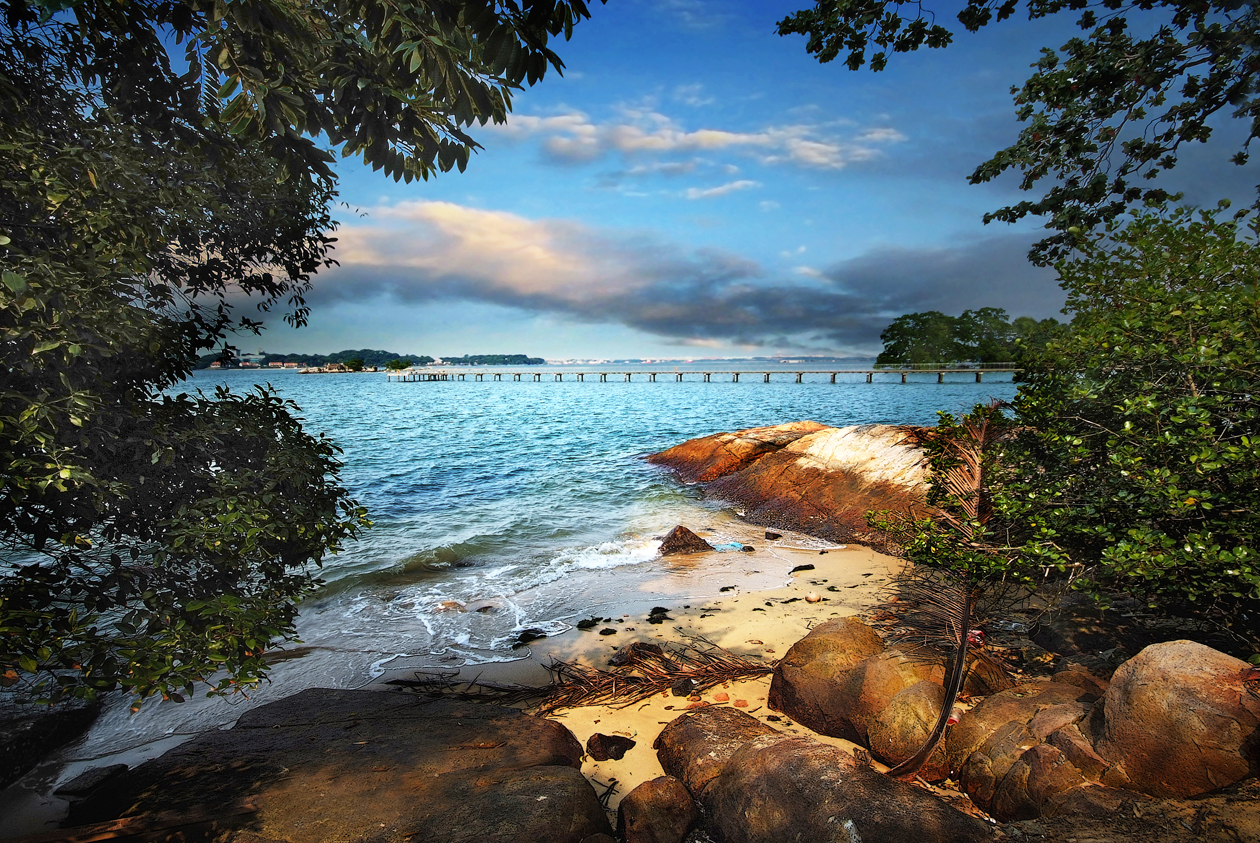
Explore Pulau Ubin, a 1,000-hectare island that offers a glimpse of what Singapore used to be. It is home to Chek Jawa, one of Singapore’s richest ecosystems.
Go there a live a life of peace, away from the bustling streets.
5. Dining at home

For a taste of home, try eating with locals in Singapore at their very own homes. Meet a local family, have a taste of authentic home-made food, and go back home having made some new friends while on a holiday!
Explore BonAppetour for a range of such dining options.
]]>


This cake can be made in a traditional round cake form or in a loaf tin. I love loaf tin cakes as they slice so neatly and are easy to serve alongside a cup of tea.
The ingredients
175g Butter
175g Caster Sugar
3 Eggs
2tsp Vanilla Extract/Essence
175g NEILL’S® Self Raising Flour
Half a Jar of your favourite Strawberry Jam
100g Desiccated Coconut
The how-to:
1. Preheat oven to 180c.
2. Lightly grease a loaf tin.
3. Cream the butter and sugar together on high speed until light and pale.
4. Beat in the eggs one a time until well combined.
5. Beat in the vanilla extract.
6. Fold in the sieved flour.
7. Pour the cake batter into the prepared loaf tin. Spread out evenly.
8. Bake in the centre of the oven for 40 mins or until a skewer inserted comes out clean.
9. Allow to cool for 15 mins before turning out onto a wire cooling rack.
10. Once cool cover with the strawberry jam ensuring the cake is well covered.
11. Sprinkle the top and sides with the desiccated coconut. Press the coconut lightly against the cake to help it stick. Store in a air tight tin or box.
You’re done!

[icegram campaigns=”612″]
]]>
We spoke to our BonAppetour hosts about why they chose to cook traditional dishes for travelers who wanted to eat with locals.
Paris:

Florence: “My family has been living in Paris for two centuries. My grandmother and my mother passed on to me the taste and the practice of traditional French cuisine. I like to add to it a touch of modernity. I've been cooking for my family and friends since my twenties and nothing makes me more happy than to share my passion for cooking”

Sandra: “Since my teens, I've been told that I can cook well. I have a strong passion for cooking, and I look forward to have the opportunity to share my food, with different people from all over the world. Also, to use this social dining experience as a chance to share some interesting stories together.”

Benedicte: “In love with my city I'd like to share a little bit of the Parisian life with guests from around the world”
Barcelona
Pamela: “Originally from Italy I’ve lived in Barcelona since 1999. I have travelled all over the world in order to experience and get to know other cultures, so I’d love to offer the same chances to visitors of Barcelona.”

David & Yuki: “For us, cooking is about telling a story, one of the most important features is generosity. What we love about receiving travellers at home is sharing a nice chat with people from different backgrounds during a cozy meal and sipping a nice Catalan wine together.”

Teresa: “I have been all over the world and it is always nice to meet people, the best thing is enjoying a good meal with them. So I want to show you food from where I grew up in Barcelona. My Mum was the person who gave me my love for cooking; after that, the world, life and travel, did the rest.”
Rome

Alessandro: “I'm a true Roman living very near the Vatican City I've always had a passion for cooking, though I studied and practiced law for a while. I learnt cooking by watching my grandmother, Iolanda and my mother Maria Pia. As a child, I loved experimenting in the kitchen.
It is always a pleasure to cook for guests. I find it relaxing, rewarding and I am always happy when guests love my dishes. I love to experiment with new recipes, starting, by tradition, and then adding a modern touch to it, or even designing completely new delicacies!”

Simona: “It was impossible not to have a passion for cooking if you grew up in a typical Neapolitan family, with two grandmothers and a mother who prepared homemade pasta. My own kitchen is focused on typical dishes of Neapolitan and Roman tradition. Now I want to share my passion with new people, opening the doors of my home to tourists visiting Rome or anyone who wants to enjoy the taste of tradition in a different way, in a more casual and comfortable atmosphere. I have a degree in law, many years of so-called "normal" jobs behind but when I wake up in the morning and I know I have to organize a dinner I feel happy! Food is culture, tradition and passion!”

Francesca: “It's every time nice sharing our cultures and knowledge and improve my english at the same time too”
Singapore:

Regina: I believe that it is important to live a full and authentic life, enjoy new experiences and be true to yourself, by doing what you love. Cooking is an expression of my love for my family, friends, and the good life we have been blessed with.
[icegram campaigns=”612″]
]]>
Jackie and Mick Parsons at Hedonistic Hiking are passionate about three things in life: food, wine and walking.
They are an anglo-australian couple who have an unusual life-style, living half the year in Australia and the other half in Italy. They feel very lucky to be able to call both countries home.
They lead small-group gourmet hiking holidays in some of the most beautiful parts of Italy and over the borders into France, Slovenia and Austria. Their itineraries include Tuscany, Umbria, the Italian Lakes and Alps, Piedmont, Friuli, Abruzzo, Basilicata and the Dolomites. Some walks are more challenging than others, and this is often dictated by the landscape, but they have a clear grading system to help guests choose the right walk for them.

They select the accommodation for the tours based on charm, quality and authenticity, and always try to support small, family-run hotels which, over time, become great friends and partners to the company.
They hand-pick restaurants which showcase the best traditional and regional cooking and the groups eat together at night. Having hiked a good distance during the day guests can enjoy guilt-free indulgence in the evenings. What is more, every day the tour manager visits local markets for fresh produce for picnic lunches which are eaten alfresco, along with easy-drinking local wines.
The tours start and finish in major cities with good onward travel connections, and the groups are collected from airports and central train stations. Before setting off the walkers are sent comprehensive pre-trip information about equipment, clothing and tips on packing.
The tours are genuinely all-inclusive with the exception of the flight, with prices covering all accommodation, meals, wines, museum visits, cooking classes, wine tastings and time spent with cheese producers or truffle hunters. There is also a support vehicle always on hand so that guests can walk as much or as little as they please.

Jackie and Mick design, research and lead all the tours themselves and are supported by a small team of dedicated colleagues who help to make the holidays memorable and enjoyable. For more information visit the website at www.hedonistichiking.com.
[icegram campaigns=”612″]
]]>